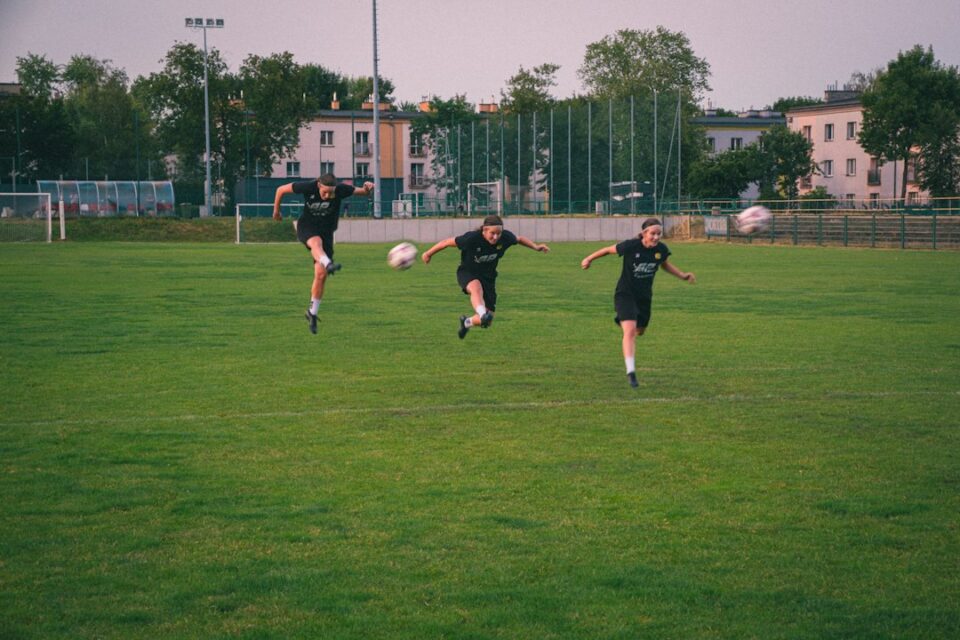
A complete rugby union training program blends strength, power, speed/agility, conditioning, and mobility, organized by off-season, pre-season, and in-season phases.
Below you’ll get quick-start weekly templates (3-, 4-, and 5-day options), plus position tweaks for forwards vs backs and sample sessions you can use today.
Rugby Union Training Program: Quick-Start Templates
Here’s the shortest route from intent to action. Pick your current phase, choose a weekly schedule you can actually sustain, then bias the work based on your position. All sessions include a structured warm-up, core training block, and a short mobility finish. Keep most sessions between 45 and 75 minutes so you can show up consistently.
- Off-season (8–12 weeks): Lift 3–4 times per week, add 2–3 field or off-feet conditioning blocks, build muscle and baseline strength.
- Pre-season (4–6 weeks): Lift 3–4 times with power emphasis, run 2–3 higher-intensity intervals and sprint sessions to game pace.
- In-season (12–20+ weeks): Two lifts, one dedicated speed exposure, one team conditioning/skills day, and an optional short primer before matches to stay sharp.
Choose a 3-, 4-, or 5-day plan:
- 3 days: Two full-body gym sessions + one speed/conditioning field day. Add team practice volume as needed.
- 4 days: Lower/upper split + one speed day + one conditioning or skills day.
- 5 days: Strength split (2–3 lifts), one speed day, one conditioning day, plus a skills slot.
Position bias at a glance: Forwards favor heavier strength (posterior chain, trunk, neck) and collision prep; backs bias speed, max velocity, and agility. Conditioning split differs too: forwards trend toward repeat-collision capacity, backs toward repeat-sprint ability and top-end speed exposure.
Testing and progression: Establish simple baselines this week—Yo-Yo Intermittent or Bronco for engine, 10–20 m split times for acceleration, vertical or broad jump for power, and 3–5RM estimates for squat/press/row patterns. Progress lifts with double progression (same weight + reps → heavier weight), sprint volumes gradually, and interval density step-ups every week or two.
In-season match-week microcycle (Saturday match, M-0):
- M-4 Monday (45–60 min): Full-body strength (heavy lower + moderate upper), short acceleration sprints (3–4 x 10–20 m), mobility finish.
- M-3 Tuesday (45–60 min): Field speed and agility mechanics, short COD drills, light on-feet shuttles or off-feet intervals if needed.
- M-2 Wednesday (30–45 min): Upper-body lift + trunk stability; optional low-impact conditioning (bike/rower 15–20 min easy).
- M-1 Thursday/Friday (20–30 min): Primer—3–4 fast accelerations, a few med-ball throws, light jumps; brief skills walkthrough; finish with mobility.
- M-0 Saturday: Match + post-match nutrition and cooldown.
For a practical warm-up structure you can plug into every session, see this match-day guide: Rugby warm-up routine: A Practical Match-Day Guide.
The Five Pillars of Rugby Performance
Winning rugby is built on five integrated pillars that map directly to training blocks. Each pillar connects to on-field situations so you always know why a drill exists.
1. Strength and Hypertrophy
Strength provides collision tolerance and scrummaging force. Build it with compound and unilateral lifts, prioritizing technique and full range. Focus patterns: squat, hinge, push, pull, lunge, and carry. Key examples: back or front squat, trap-bar deadlift, Romanian deadlift, bench press, incline dumbbell press, weighted chin-up, single-leg RDL, split squat, and heavy carries.
2. Explosive Power
Power converts weight-room strength into on-field force. Use Olympic lift variations (power clean, clean pull, high pull), loaded and unloaded jumps (box jump, countermovement jump, hurdle hops), and med-ball throws (rotational, chest pass, overhead). Keep reps low, intent high, and rest generous to keep outputs crisp.
3. Speed and Agility
Cover acceleration mechanics (0–10 m for forwards, up to 20 m for backs), change of direction, and periodic max-velocity exposure (backs may need flying 20s). Drills: A-skips, wall drills, falling starts, 3-step buildups, figure-8 COD, and small-space agility games. Limit total sprint volume to what you can do fast with quality.
4. Conditioning
Blend on-feet shuttles and tempo runs with off-feet intervals (bike, rower) to build repeat-sprint capacity without beating up the joints. Use aerobic base work in the off-season, then shift to high-intensity intervals and repeat-sprint training in pre-season and in-season.
5. Mobility and Joint Care
Use dynamic warm-ups, trunk stability, and shoulder/hip/ankle care as non-negotiables. Micro-doses of mobility fit well after lifting and on rest days. Goal: keep ranges you train through and reduce stiffness from contact.
Hydration and simple recovery habits matter. If you need a practical framework, this guide helps: Build a sports hydration strategy for training and competition.
Seasonal Periodization: Off-Season, Pre-Season, and In-Season
Organize the year so each block builds the next. Mini-blocks typically run 3–4 weeks, followed by a reload week with lower volume. Your aim is steady progress without accumulating fatigue you can’t recover from.
| Season phase | Primary focus | Weekly gym sessions | Field/conditioning | Conditioning method | Key lifts/drills | Tests to track | Typical session length |
|---|---|---|---|---|---|---|---|
| Off-season | Muscle, base strength, aerobic capacity | 3–4 | 2–3 | Mix of tempo runs + off-feet intervals | Squat, deadlift, press, rows; unilateral legs; med-ball basics | Bronco or Yo-Yo; vertical/broad jump; 3–5RM estimates | 60–75 min |
| Pre-season | Power, speed, repeat-sprint fitness | 3–4 | 2–3 | Short shuttles, hills, repeat sprints | Olympic variations, jumps, sprints, COD | 10–20 m sprint splits; Yo-Yo; jump tests | 45–70 min |
| In-season | Maintain strength/power; sharpen speed | 2 | 1–2 + team skills | Short exposures; off-feet as needed | Heavy lower + moderate upper; primers; accelerations | Weekly 10–20 m timing; quarterly Yo-Yo | 30–60 min |
If you want a full-year blueprint for clubs and schools, this resource pairs well with the plan here: Rugby program: A Complete 12-Month Plan for Clubs and Schools.
Weekly Templates by Training Days (3-, 4-, and 5-Day Plans)
Pick the template that matches your reality. Each day lists the core ingredient; add or subtract accessories, not the main course.
3-Day Template
- Day 1: Full-body lift (heavy lower focus) + 3–4 short accelerations (10–20 m) + brief mobility.
- Day 2: Field speed and agility session + short conditioning finisher (on-feet or off-feet depending on joint tolerance).
- Day 3: Full-body lift (upper emphasis) + med-ball throws + trunk stability.
Integrate team training by placing tactical sessions after Day 2 when possible. During busy weeks, slash assistance volume by 30–50 percent but keep intensity on main lifts and sprints.
4-Day Template
- Day 1: Lower-body strength + jumps.
- Day 2: Upper-body strength + med-ball power.
- Day 3: Speed/acceleration + COD drills; short shuttles for fitness.
- Day 4: Mobility/recovery or off-feet conditioning (bike/row 20–30 min easy to moderate).
This split suits players who need a dedicated speed day. Use off-feet conditioning when joints feel beat up, keeping the engine without extra pounding.
5-Day Template
- Day 1: Lower-body strength (heavy) + Olympic variation (clean pull/high pull) + short accelerations.
- Day 2: Upper-body strength (bench/chin) + med-ball throws + trunk.
- Day 3: Speed day (acceleration and occasional max-velocity for backs).
- Day 4: Conditioning day (repeat shuttles or tempo runs; off-feet intervals if needed).
- Day 5: Skills/small sided games + mobility micro-dose.
Time-crunched or heavy match weeks: shrink accessories, move conditioning off-feet, keep one strength day and one speed exposure. For a coach-ready 12-week block that aligns with these templates, see: Rugby training program: a complete 12-week plan for coaches and players.
Position-Specific Adjustments: Forwards vs Backs
Forwards need more absolute strength and collision resilience; backs need more speed and agility. Both need trunk stability and neck care. Here’s how the weekly emphasis shifts.
| Position | Strength emphasis | Speed emphasis | Conditioning focus | Key drills | Set/rep bias |
|---|---|---|---|---|---|
| Forwards | Posterior chain (deadlift/RDL), squats, heavy carries, neck and trunk work | Short accelerations (0–10/15 m), sled pushes for drive | Repeat-collision capacity; medium-length shuttles | Sled pushes, heavy carries, scrum-specific isometrics, tackle pad circuits | Main lifts 3–5 reps; accessories 6–8; carries 20–40 m |
| Backs | Balanced upper/lower with unilateral legs; elastic power | Acceleration + max-velocity (flying 10–20s), agility and COD | Repeat-sprint ability; short high-quality shuttles | Flying 20s, wicket runs, ladder-free agility patterns, med-ball rotational throws | Main lifts 3–5 reps; jumps 3–5 reps; sprints 4–10 high-quality reps |
Drill swaps: Forwards can trade flying 20s for heavy sled marches; backs can swap long sled pushes for more max-velocity buildups. Both groups keep acceleration doses, as every player benefits from 0–10 m power.
Note on 7s vs 15s: Sevens players need longer intervals and higher speed exposure volumes. Bump conditioning to more tempo runs and longer repeat shuttles, and plan max-velocity exposures more often.
Rugby league vs union: conditioning and contact demands overlap, but scrummaging, set-piece, and phase patterns differ. The templates here are for union; league players can adapt by adding more continuous repeat-sprint work and fewer heavy scrum-specific isometrics.
Sample Sessions You Can Run This Week
Use these ready-to-run sessions to start today. Adjust loads using effort ratings: leave 1–2 reps in reserve on main lifts unless noted. Rest enough to keep outputs crisp.
Gym A (Strength–Power, lower emphasis)
- Warm-up (10 min): Dynamic mobility + 2–3 x 10 m accelerations at 80–90 percent. See the warm-up guide linked earlier for a reliable structure.
- Heavy lower lift: Trap-bar deadlift 4 x 3–5 at a challenging load you can move fast.
- Olympic variation: Clean pull 4 x 3 with intent.
- Accessory pair: Split squat 3 x 6–8 per leg + hamstring bridge 3 x 8–10.
- Trunk: Side plank 3 x 30–40 s per side.
- Mobility exit: Hips/ankles 5 min.
Gym B (Upper/Total)
- Warm-up (8–10 min): Band shoulder series + light med-ball throws 2 x 5.
- Press: Bench press 4 x 3–5; superset with chest-supported row 4 x 5–8.
- Unilateral: Single-arm DB press 3 x 6–8; superset with single-leg RDL 3 x 6 per leg.
- Med-ball power: Rotational throw 4 x 4 per side.
- Trunk: Dead bug 3 x 8 per side.
Field Speed and Agility (45–60 min)
- Warm-up (10 min): A-skips, fast marching drills, 2–3 buildups to 80 percent.
- Acceleration: 6–8 x 10–20 m from varied starts (prone, push-up, 3-point). Full recovery.
- COD: 4 x 5–10 m 180-degree turns, 3 x 20 m figure-8 runs.
- Short shuttle finisher: 4–6 x 30–40 s on, 60–90 s easy walk; or swap for 10–12 min off-feet intervals if legs are heavy.
Conditioning Options (choose one)
- On-feet tempo runs: 10–15 x 100 m at 60–70 percent; walk back rest.
- Repeat shuttles: 2–3 sets of 6 x 15–20 s on / 45–60 s off; 2–3 min between sets.
- Off-feet intervals (bike/rower): Beginner 6–8 x 30 s hard / 90 s easy; Intermediate 8–10 x 30/60; Advanced 10–12 x 40/60.
Keep technique in conditioning, too: upright posture, steady breathing, and rhythm. Off-feet days are a smart substitution when joints feel beat up.
Testing, Benchmarks, and Progression Made Simple
Testing keeps training honest. Use a short list of tests, set up re-test dates, and let the numbers guide small weekly adjustments.
- Engine: Bronco or Yo-Yo Intermittent test. Re-test at the end of off-season and pre-season.
- Speed: 10 m and 20 m electronic or stopwatch timing. Re-test monthly in the build-up, then quarterly in-season.
- Power: Vertical jump or broad jump. Track best and average.
- Strength: 3–5RM estimates for squat/press/row patterns calculated from submax sets.
Progression rules:
- Lifts: Double progression. Hit the top of a rep range at a set RPE, then increase the load 2–5 percent next week.
- Sprints: Add 1–2 total reps or extend distance slightly every 1–2 weeks if timing stays consistent.
- Intervals: Increase total work time or shorten rest gradually, not both at once.
- Load management: Track RPE, sleep, and session length. If readiness drops, reduce volume before intensity.
Keep a simple tracking sheet: date, session type, main lift loads and reps, sprint times, interval details, RPE, and notes. That’s enough to see patterns and make informed tweaks.
Common Mistakes, Quick Fixes, and Equipment Alternatives
Small changes protect your training time and outcomes.
- Junk conditioning volume: Fix by capping on-feet volume and adding off-feet intervals when you’re sore.
- Neglecting sprint mechanics: Add 10–15 minutes of drills before any speed work; fewer high-quality sprints beat many sloppy reps.
- Skipping reloads: Every 3–4 weeks pull volume down for 5–7 days so you can progress again.
- Poor warm-ups: Use a repeatable 8–12 minute flow—dynamic mobility, activation, and 2–3 buildups. Reference the warm-up article linked above.
Time-saving swaps: Supersets (push + pull), contrast sets (heavy lift + jump), and condensed 30–40 minute sessions in dense weeks. Keep the main lift and a power element; drop accessories and finishers.
Home or limited equipment: Kettlebell deadlift and goblet squat stand in for barbell lifts; sandbag shoulder-to-over for total-body power; push-ups, inverted rows, and step-ups build robust strength. Add a jump rope or bike for conditioning.
Recovery basics that fit the plan: short mobility micro-doses after sessions, low-impact easy cardio on off days, and consistent sleep routines. Small habits compounded across the season do more than sporadic marathon sessions.
Use this guide as your base and adjust the dials for your team, position, and calendar. The players who improve most in-season are the ones who keep intensity on the key lifts and sprints while trimming volume when the match load spikes. That balance keeps you fresh enough to perform and prepared enough to adapt.